
Noise at home & sleep disturbance
Noise can seriously disrupt your sleep, yet disappear just when someone arrives to measure it. We start with the most affordable method that reliably captures the noise and helps us decide what to do next, rather than automatically choosing the most expensive formal assessment.

Step 1: Record the noise
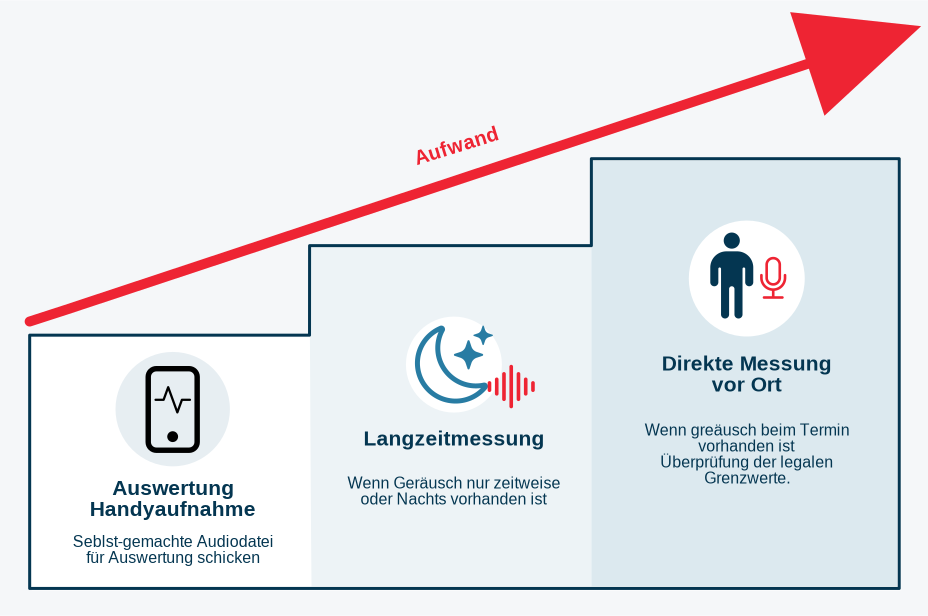
The appropriate starting point depends on how reliably the noise occurs:
- You have already recorded it. A preliminary analysis can then show whether the file helps narrow down the cause. The linked measurements page explains what we need, what can be inferred and the limitations of the recording.
- It occurs only irregularly or at night. Long-term monitoring is often the most cost-effective approach. It documents when and how often the noise occurs, as well as its level and spectral composition.
- It is regularly and reliably present. We then begin directly with measurement and root-cause investigation on site instead of first recording for several days.
If you are unsure, a brief description is sufficient for an initial assessment. We will suggest an appropriate approach before you incur the cost of a noise survey.
Step 2: Establish the cause
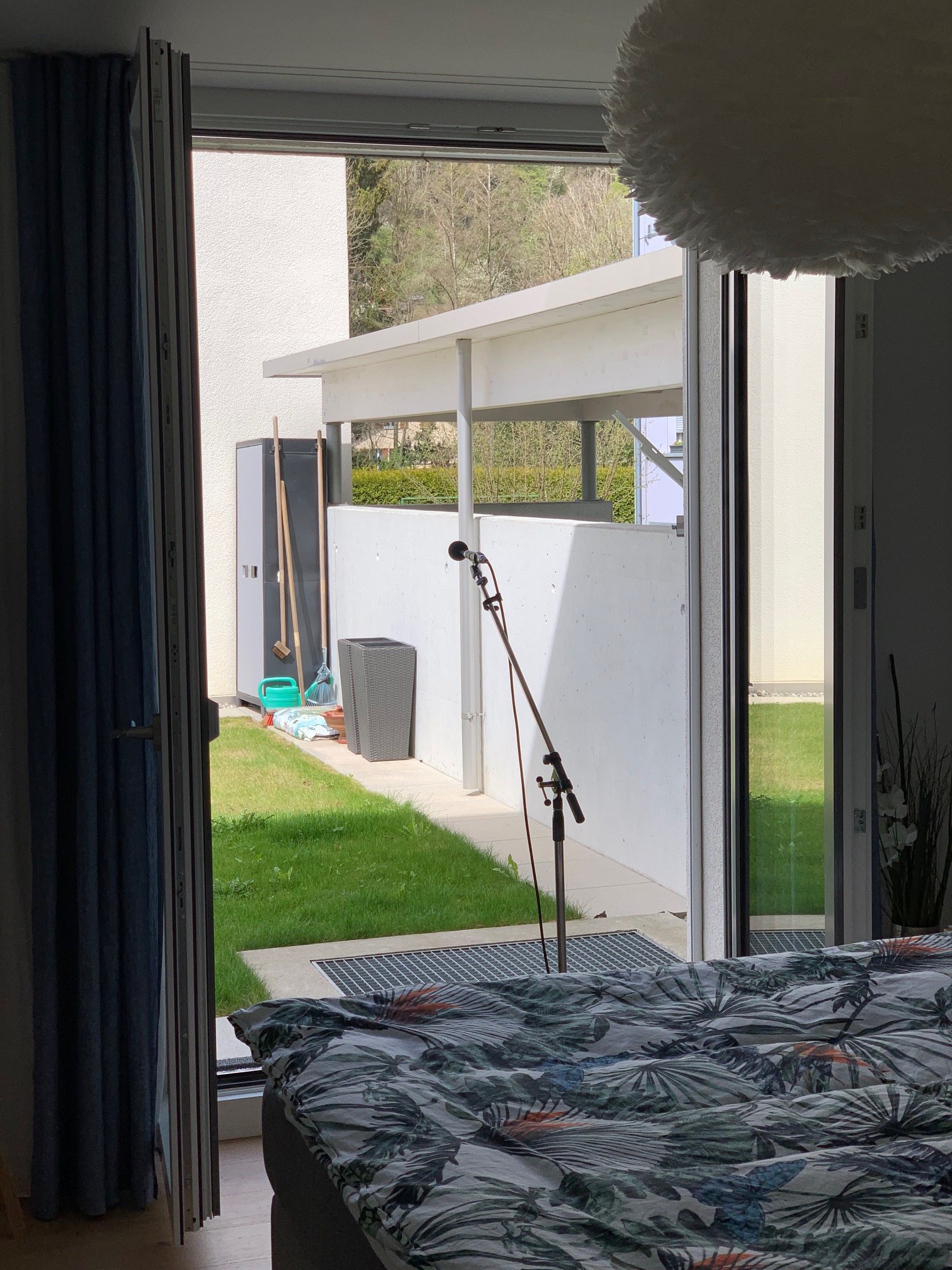
Once the noise can be captured in the relevant operating condition, its source and the path by which it enters the affected room must be established. Only then is it possible to decide which changes will work and which rules apply to a formal assessment.
The result separates the technical question from the formal one: it documents the source, occurrence and relevant transmission path. This allows the parties involved to decide whether the appropriate next step is remedial work, a formal assessment or a voluntary agreement. The linked expert-reports page explains which rules apply to the specific case, which limits are relevant and what a formal assessment requires.
Step 3: Choose a solution
Once the source is known, measures are prioritised where they are most effective: at generation, at the coupling into the structure, along the propagation path or in the affected room. Effectiveness, effort, responsibility and the need for evidence determine which option is appropriate.
If there is a relevant defect or an applicable limit is exceeded, remedial work must have a clearly documented design basis and verifiable results.
If, however, the limits are met but the residual noise remains disturbing, options include technical optimisation, an agreement with the responsible party or, in suitable cases, targeted masking of the noise with a NoiseMasker.